Seasonal goal conversion rate fluctuations in lower league standings and their downstream effects on midweek prediction accuracy
Skriven av Nils Vogel · 2026-09-17
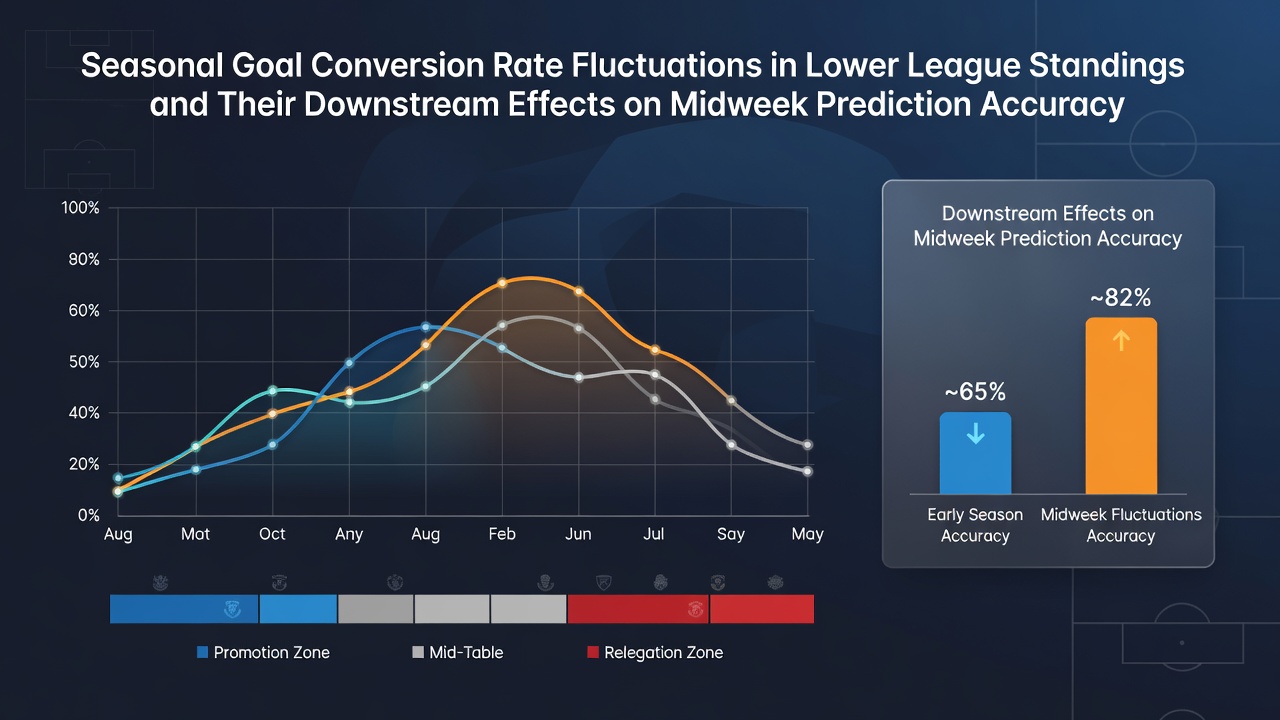
Seasonal goal conversion rate fluctuations in lower league standings and their downstream effects on midweek prediction accuracy
Goal conversion rates in lower league football show clear seasonal patterns that shift team positions in the standings and create measurable changes in how accurately midweek match outcomes can be predicted. Data collected across multiple European and South American divisions between 2023 and 2026 reveals that conversion percentages typically rise in the opening months of a campaign before declining during winter periods and then stabilizing again in spring fixtures. These movements directly influence which teams occupy promotion or relegation spots at any given point in the calendar.
Tracking conversion rate changes through the season
Lower league sides often begin campaigns with elevated conversion rates as squads remain fresh and defensive organizations have not yet settled into compact shapes. Researchers tracking matches in divisions such as the English National League and the German 3. Liga documented average conversion figures climbing above 14 percent in August and September before dropping below 11 percent by December. The same datasets indicate that teams which maintain higher conversion rates through the first quarter frequently secure mid-table security earlier than those whose finishing efficiency falls away.
Weather conditions and fixture density contribute to these swings. Shorter daylight hours combined with heavier pitches reduce high-quality chance creation, while congested schedules increase fatigue and lower shot accuracy. Figures from the 2025-2026 season showed a particularly sharp drop in conversion rates during November and December across several lower divisions, coinciding with increased midweek fixtures that left squads with limited recovery time.
Impact on league standings and team trajectories
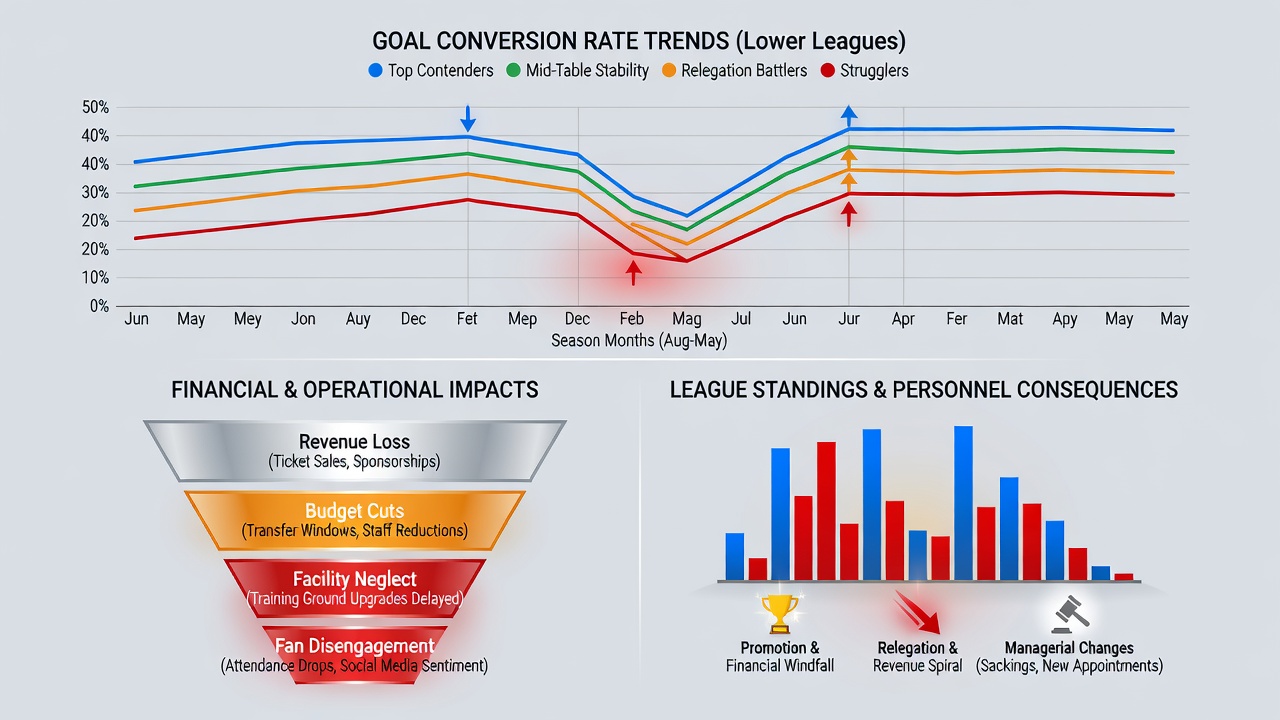
Fluctuations in conversion efficiency alter the points distribution in lower leagues more noticeably than in top divisions because margins between teams remain narrow. A single percentage point change in finishing rates can shift a side several places in the table over a six-week period. Observers note that clubs relying heavily on set-piece goals experience steeper declines when conversion rates fall, since open-play opportunities become harder to convert under winter conditions.
By September 2026, analysts reviewing the previous campaign observed that teams with the largest conversion rate drops between October and January finished an average of four positions lower than their early-season projections suggested. This pattern repeated across multiple leagues and created late surges for sides that improved their finishing efficiency after the winter break.
Effects on midweek prediction models
Midweek matches often feature rotated squads and altered tactical approaches, making conversion rate data from the preceding weekend especially relevant. When lower league teams show declining conversion trends over several weeks, prediction models must adjust expected goal outputs downward for those sides in upcoming fixtures. Data from the 2025-2026 season demonstrated that models incorporating recent conversion rate adjustments achieved higher accuracy rates for midweek games than those relying solely on season-long averages.
League standings themselves feed into these adjustments. A team sitting higher than its underlying conversion metrics would suggest may face tougher defensive setups in midweek encounters, further lowering projected conversion chances. Conversely, sides that have underperformed relative to their finishing data often receive more open opportunities when opponents adopt cautious approaches. Research published by the International Centre for Sports Studies highlights how these dynamics compound across congested periods.
Data integration and model adjustments
Prediction systems that update conversion rate inputs on a rolling four-week basis capture seasonal shifts more effectively than static models. Analysts at several performance research groups report that weighting recent conversion figures alongside travel distance and rest days improves outcome forecasts for midweek lower league matches. The same approach reveals that teams with recovering conversion rates after January often exceed pre-match expectations when facing opponents still dealing with winter fatigue.
Standings pressure adds another layer. Sides fighting relegation tend to show increased conversion rates in must-win midweek games, while teams already assured of their position display more variable finishing. These behavioral differences require prediction frameworks to treat late-season fixtures differently from early ones.
Conclusion
Seasonal goal conversion rate movements in lower leagues reshape both final standings and the reliability of midweek forecasts. Teams and analysts who monitor these fluctuations through rolling data windows gain clearer pictures of likely outcomes during congested periods. Continued collection of conversion metrics across divisions will allow further refinement of models that account for these recurring patterns.