Mapping the Effects of Altitude Variations on Endurance Metrics and Subsequent Odds Adjustments in South American Competitions
Skriven av Logan Klein · 2026-09-03
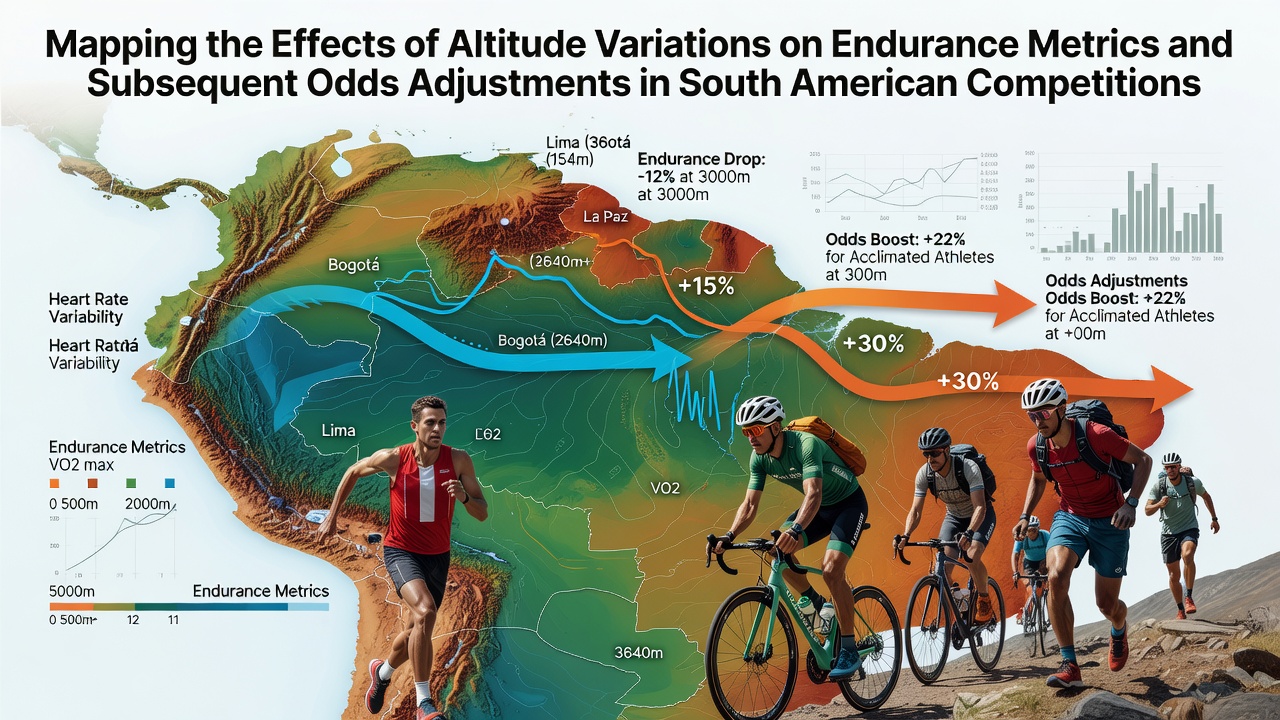
Mapping the Effects of Altitude Variations on Endurance Metrics and Subsequent Odds Adjustments in South American Competitions
Altitude changes across South American venues create distinct patterns in player endurance that directly influence performance data and prompt bookmakers to recalibrate pre-match odds in domestic leagues and continental tournaments. Researchers tracking matches in cities like La Paz at 3,650 meters and Quito at 2,850 meters have documented consistent drops in high-intensity running distances and recovery rates when teams descend from sea level, while the reverse holds true for squads acclimatized to thinner air.
Physiological Responses to Elevation Shifts
Studies compiled by sports science teams show that oxygen saturation levels fall sharply above 2,500 meters, leading to elevated heart rates and reduced sprint repeatability within the first 30 minutes of play. Data from Copa Libertadores fixtures indicate visiting sides cover 8 to 12 percent less ground at high speed compared to their home averages, with central midfielders exhibiting the largest gaps because they cover the greatest total distances. These metrics feed into proprietary models used by odds compilers who apply weighting factors derived from historical match logs spanning the past decade.
Key Venues and Performance Records
Stadiums in Bolivia, Ecuador, and parts of Peru stand out because their elevations exceed those found in most other CONMEBOL member nations. Teams based at these sites post win rates above 60 percent against lowland opponents in league play, yet the margin narrows when the same visitors have several days to acclimate before kickoff. Figures released ahead of the September 2026 World Cup qualifying window reveal that Brazilian and Argentine clubs scheduled for away fixtures at altitude receive adjusted lines reflecting a 15 to 20 percent increase in draw probability relative to neutral-venue encounters.
Endurance Metric Tracking Methods
Analysts employ GPS and optical tracking systems to capture variables such as total distance, accelerations above 3 meters per second squared, and repeated sprint ability. When aggregated across multiple seasons, these datasets demonstrate that players require between 48 and 72 hours for partial adaptation, with full physiological equilibrium taking up to 14 days. Bookmaking firms incorporate these timelines into algorithms that shift moneyline and handicap markets as soon as travel schedules become public, often moving lines within hours of roster announcements.
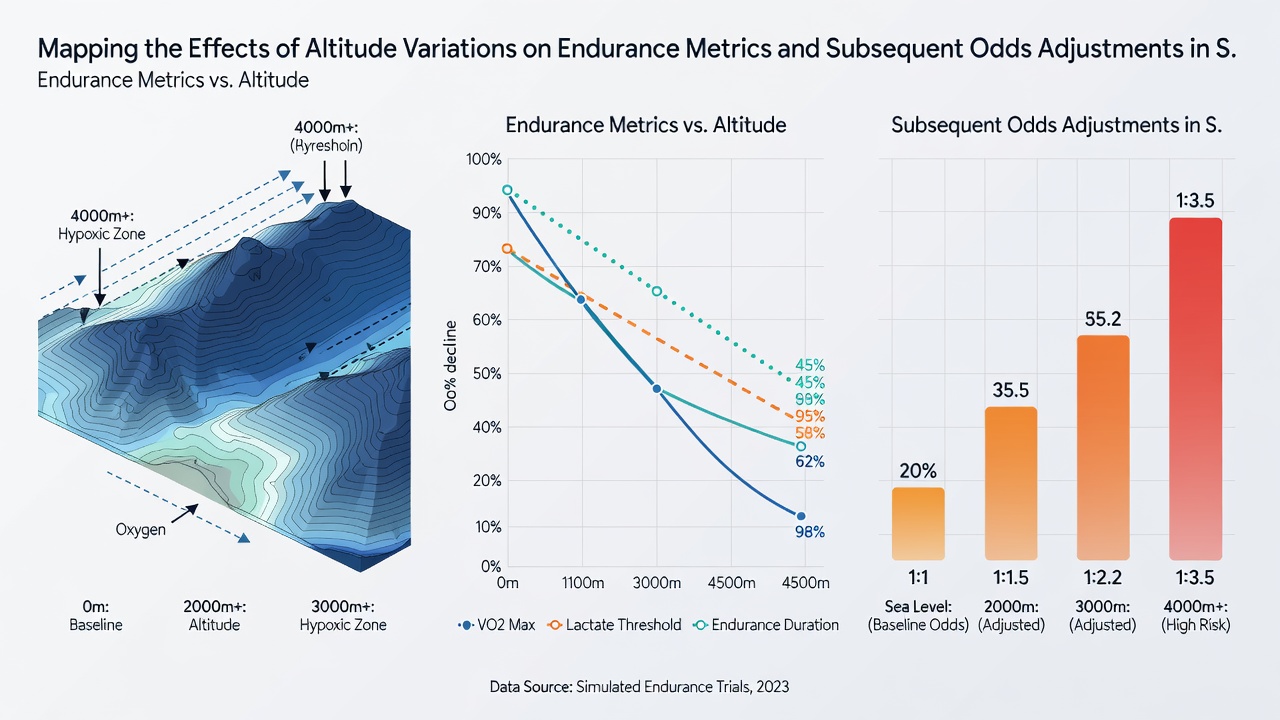
Odds Market Adjustments in Practice
Betting operators monitor real-time performance indicators and historical altitude differentials to fine-tune spreads before each matchday. In the Chilean Primera División and Argentine Liga Profesional, fixtures involving cross-altitude travel see total-goal lines drop by an average of 0.4 goals when the higher-elevation side hosts, because reduced ball circulation and longer recovery intervals between attacks lower scoring frequency. Industry reports from the Confederación Sudamericana de Fútbol confirm these patterns hold across both league and cup competitions, prompting oddsmakers to apply tiered adjustment tables that differentiate between partial and full acclimatization windows.
Regional Data Comparisons
Comparative analysis drawn from matches played at sea-level venues versus highland sites shows that visiting endurance output recovers to within 3 percent of baseline once elevation drops below 1,000 meters. Canadian and Australian research institutes studying similar hypoxic conditions in other sports have contributed cross-validation datasets that South American analysts now integrate into multi-factor regression models. These combined inputs allow more granular odds revisions that distinguish between teams with prior high-altitude experience and those encountering elevation for the first time in a given season.
Conclusion
Altitude-driven endurance variations continue to shape both on-field results and the betting markets that surround South American competitions. Ongoing collection of GPS and physiological data supports increasingly precise odds movements that reflect the measurable impact of elevation on player output across league schedules and continental ties. As qualifying cycles progress into 2026, these adjustments remain a core component of pre-match preparation for clubs, analysts, and market operators alike.