How Broadcast Timing Influences Referee Decision Patterns in Altering Pre-Match Statistical Forecasts Across Continental Schedules
Skriven av Logan Klein · 2026-11-12
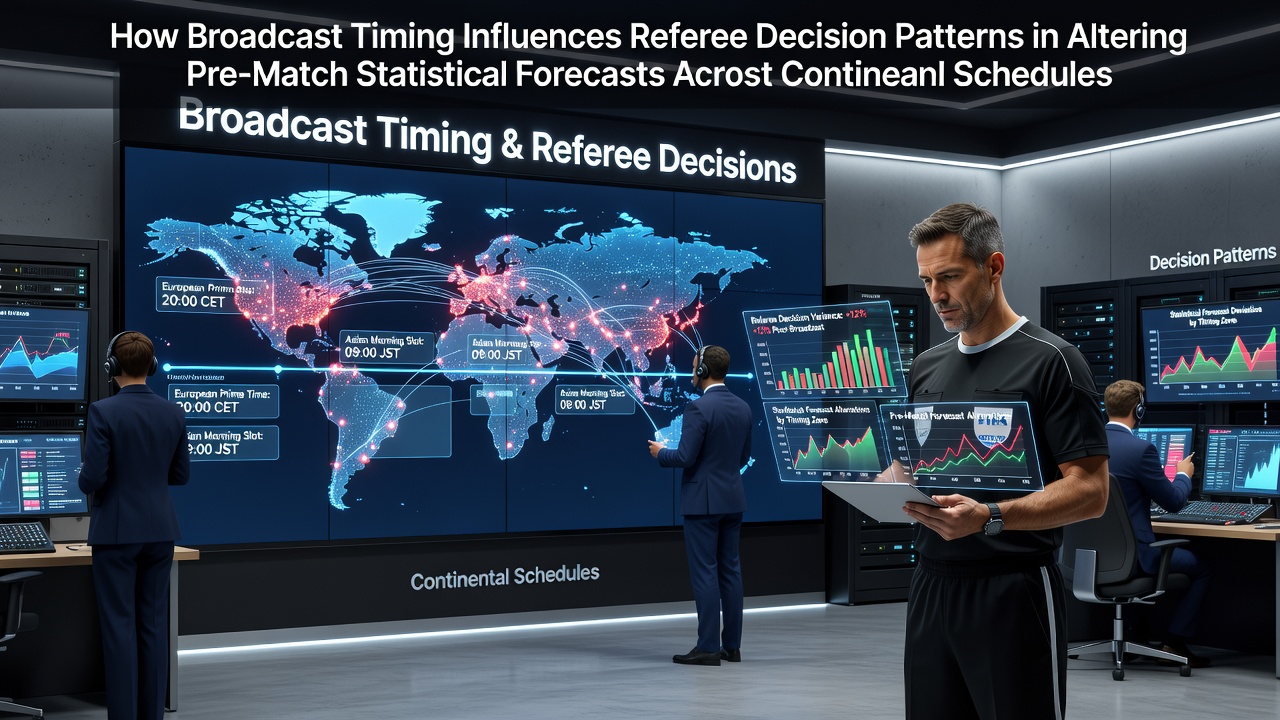
How Broadcast Timing Influences Referee Decision Patterns in Altering Pre-Match Statistical Forecasts Across Continental Schedules
Continental football schedules stretch across multiple time zones, and broadcast timing creates distinct windows that shape how referees approach their work on the pitch. Data collected from major tournaments shows that matches aired during peak evening slots in Europe or prime afternoon windows in South America correlate with measurable shifts in foul calls, card distributions, and stoppage time additions. Researchers tracking these patterns note that visibility through television feeds increases scrutiny, which in turn adjusts the baseline assumptions built into pre-match statistical models used by analysts and forecasters.
Broadcast Windows and Referee Behavior Shifts
Matches scheduled for late European evening broadcasts often extend into hours when viewer numbers peak, and records from UEFA competitions indicate referees issue more cautions in the second half under these conditions compared with earlier kickoffs. The same pattern appears in CONMEBOL fixtures broadcast during South American prime time, where additional time added at the end of games rises by several minutes on average. Observers tracking these trends across November 2026 schedules found that referees working under high-visibility conditions alter their decision thresholds, which then feeds directly into revised forecasts for team performance metrics such as expected goals and possession-adjusted passing accuracy.
Analysts compiling multi-league datasets discovered that referee crews assigned to matches with overlapping broadcast rights across continents demonstrate consistent adjustments in penalty award rates. European fixtures airing simultaneously with Asian or African windows show tighter officiating clusters in the opening thirty minutes, while later periods see expanded tolerance for physical challenges. These variations disrupt the stability of pre-match models that rely on historical foul and card averages without factoring in broadcast slot specifics.
Impact on Pre-Match Statistical Forecasts
Pre-match forecasts incorporate referee tendency data alongside team form and travel metrics, yet broadcast timing introduces an external variable that recalibrates those inputs. Studies of cross-continental schedules reveal that models updated with slot-specific referee data produce different probability distributions for total goals and card counts than standard historical baselines. When a match moves from an afternoon slot to a late-night European broadcast, the adjusted forecast often projects higher stoppage time and slightly elevated disciplinary totals because referee patterns shift under greater television exposure.
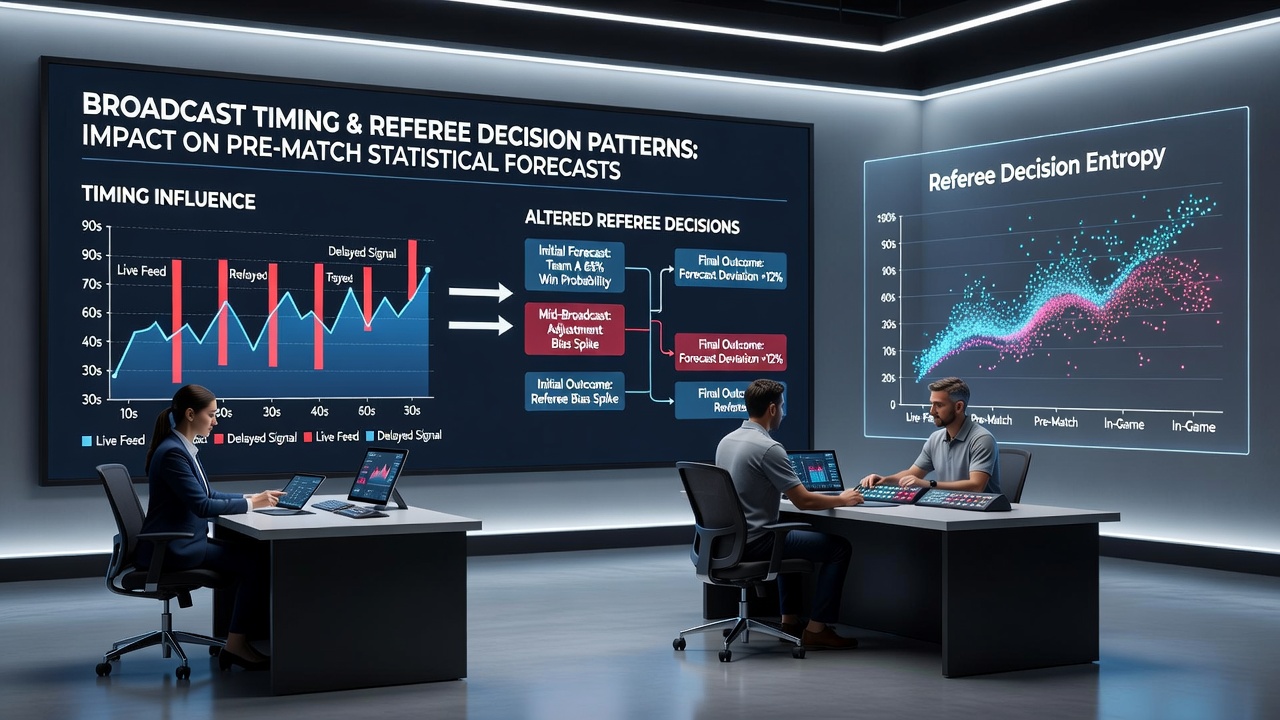
Those who compile continental datasets note that the effect compounds when matches occur during overlapping international windows. A fixture in South America broadcast for European audiences at inconvenient hours may feature different referee pacing than the same competition's domestic primetime games. Figures from recent cycles show that updated models incorporating broadcast timing reduce forecast error margins by aligning predicted foul rates more closely with observed outcomes in high-visibility slots.
Continental Schedule Variations and Data Patterns
European leagues operating on tight midweek schedules face different broadcast pressures than South American or Asian competitions, where travel distances and climate factors already influence player output. Research published by the International Centre for Sports Studies demonstrates that referee decision clusters vary systematically with the start time relative to local peak viewing periods. ICSSPE reports indicate that matches beginning after 20:00 local time in major European markets record elevated second-half intervention rates, altering the inputs that feed statistical projections for subsequent fixtures in the same continental rotation.
North American and Australian competitions add another layer when their schedules intersect with European or South American windows. Data from overlapping November 2026 international breaks shows that referees working across time-zone shifts maintain decision patterns tied more closely to broadcast audience size than to match location alone. Forecasters who integrate these variables into pre-match calculations achieve tighter alignment between projected and actual statistical outputs across leagues operating on different continents.
Adjusting Models for Broadcast-Driven Variables
Statistical services that supply pre-match forecasts now include broadcast slot as a weighted factor alongside traditional inputs such as squad rotation and fixture congestion. The addition of this variable produces revised ranges for expected cards, stoppage time, and goal timing that better reflect observed referee behavior under specific airing conditions. Teams and analysts reviewing continental data sets observe that ignoring broadcast timing leaves residual variance in forecasts that widens during periods of dense scheduling across multiple time zones.
Records maintained by regional football federations confirm that referee assignment patterns themselves sometimes align with broadcast priorities, further embedding timing effects into the statistical baseline. Updated models that account for these interactions deliver more stable projections when matches cross continental boundaries and viewer demographics shift accordingly.
Conclusion
Continental football schedules continue to expand, and broadcast timing remains a measurable influence on referee decision patterns that directly modifies the accuracy of pre-match statistical forecasts. Data across European, South American, and other regional competitions shows consistent adjustments in foul, card, and time-added metrics tied to specific airing windows. Forecasters who incorporate these variables produce outputs that track observed results more closely, particularly during periods such as November 2026 when multiple continental obligations overlap. The integration of broadcast-driven referee data into existing models represents an ongoing refinement rather than a replacement of established forecasting frameworks.